Posts

Showing posts with the label education

Women and education in developing countries
Image
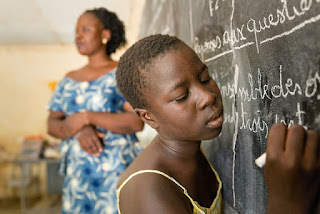
 In developing nations where girls and women may encounter substantial barriers to education, access to education is crucial for empowering women and advancing gender equality. The cycle of poverty can be broken, health results can be improved, and education can enable women to take more active roles in their societies and economies. However, obtaining an education continues to be extremely difficult for females and women in developing nations. Due to poverty, early marriage, or societal norms that place more value on boys' education than girls', many girls are compelled to leave school. In schools, discrimination and harassment against girls are possible and can foster a hostile learning atmosphere. Investment in education and the promotion of laws that assist women's and girls' education in developing nations are crucial for addressing these issues. This entails expanding access to high-quality education and offering assistance to females who want to continue their ed...
Women and globalization

Image
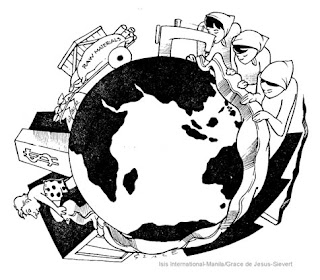
 Both positive and negative effects of globalization have had a significant impact on the lives of women all over the globe. One the one hand, globalization has created new chances for women to engage in the global economy, gain access to cutting-edge tools and knowledge, and make connections with other women all over the world. The exploitation of women's labor, the dismantling of conventional gender roles and norms, and the escalation of gender inequality are all consequences of globalization, on the other hand. The growth of economic prospects has been one of globalization's benefits for women. Women have gained new and significant opportunities to engage in the global economy as trade and investment flows have grown. This has made it possible for many women to reject traditional gender roles and support their families through business ventures and other forms of employment. Globalization has also made women more vulnerable to new kinds of abuse and exploitation. In global s...

Women and innovation

Image
 In recent years, innovation has grown in importance as a factor in both economic development and societal advancement, and women are increasingly contributing to this trend. Women are making a significant contribution to innovation across a variety of disciplines, including business, the arts, science, and technology. The importance of women in innovation and the difficulties they encounter will be discussed in this article. Women have historically been underrepresented in business and innovation. For a long time, women had trouble breaking into these areas because of cultural stereotypes, restrictions on their access to education and training, and a lack of funding and resources. Women have made considerable progress in innovation and entrepreneurship, though, in recent years. Notwithstanding these advancements, women continue to encounter major obstacles to fully engaging in innovation. The absence of leadership and representation is one of the main obstacles. In numerous indust...

Women and international trade

Image
 Women have assumed a more prominent role in international commerce as it has grown in importance as a component of the global economy. Women still encounter significant obstacles to fully participating in global trade, especially in developing nations. We will look at the challenges women encounter in international trade as well as their part in it in this article. Both as consumers and producers, women are essential to global commerce. Women generate demand as consumers for a variety of products and services, from apparel and cosmetics to technology and travel. Women participate as producers in all facets of the worldwide supply chain, from manufacturing and farming to design and marketing. Women confront enormous obstacles to fully engaging in global trade, despite its importance. Lack of financial access is one of the main obstacles. Since banks and other lenders may consider women-owned firms to be riskier investments than those owned by males, women-owned businesses frequentl...

Women and refugees

Image
 Millions of individuals worldwide are impacted by the refugee crisis, but women and girls are disproportionately affected. About half of all refugees worldwide are women and girls, and they frequently encounter particular difficulties and dangers both on their way to safety and while living in refugee camps. The threat of sexual and gender-based violence is one of the main issues that women and children must deal with. While traveling or living in refugee camps, many women and girls experience sexual abuse, harassment, and exploitation. As a means of survival, women and children may also be forced into prostitution or early marriage. Additionally, the lack of access to healthcare and education for women and girls in refugee camps can prolong cycles of disadvantage and poverty. Girls may be forced out of school to care for younger siblings or to marry young, while women may find it difficult to receive reproductive or maternal healthcare. Notwithstanding these obstacles, women and ...

Women and global development

Image
       Although women are essential to the progress of the world, they frequently confront obstacles that prevent them from making a full contribution. Poverty, a lack of access to healthcare and education, gender-based violence, and prejudice disproportionately affect women. These problems limit their ability to contribute to the growth of their communities and nations.      In order to achieve gender equality and sustainable development, women's access to education must be improved. Women who have more education are more likely to make more money, live longer, and have better health. They are also more prepared to participate in decision-making. Women who are educated are better able to assert their rights and call for justice and equality.      Women also require access to healthcare services in addition to education. Increased rates of maternal mortality, malnutrition, and other avoidable health problems might result from a lack of a...

Women and poverty

Image
     Since that women are disproportionately affected by poverty worldwide, women and poverty are intimately related. The United Nations estimates that 330 million women live on less than $1.90 a day, making them more likely than men to be poor.      Women are more prone to face poverty for a variety of reasons. First off, compared to men, women typically have lower levels of education and less economic possibilities, which can have an impact on their ability to earn money and help them overcome poverty. This is especially true in underdeveloped nations where women frequently experience discriminatory societal norms and don't have access to resources like loans, land, and technology.      Women are also more likely to work in low-paying, ad hoc jobs like domestic labor, farming, and clothing manufacture, which frequently lack job stability, benefits, and protections like minimum wage regulations. Women may find it more difficult to provi...

Women and technology

Image
       Through history, there has been a complicated relationship between women and technology. Despite tremendous advancements, gender bias and discrimination still exist, and women still have a low representation in the technological sector. Women are fighting to promote diversity and inclusion in the industry while simultaneously making substantial contributions to the field of technology.      The gender gap in education and employment is one of the biggest obstacles women in technology confront. STEM (science, technology, engineering, and mathematics) degrees, which are essential for professions in technology, are less likely to be pursued by women. In addition, women encounter a variety of gender biases and preconceptions and are less likely to be employed and promoted in technology businesses.      Not with standing these obstacles, women are significantly advancing the technological field. In addition to being instrumental in the...

Women in history and their contributions

Image
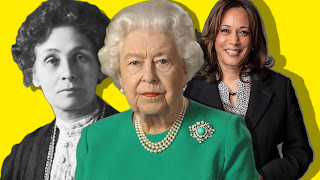
       Women have made great contributions to society throughout history despite severe challenges and bias based on gender. These successes have paved the way for succeeding generations of women to thrive in a variety of sectors, including science, politics, education, and social justice.      Marie Curie, a scientist and chemist who discovered radioactivity and became the first woman to win a Nobel Prize, is one example of a woman who made a significant contribution to history. Future developments in nuclear physics and medicine were made possible by her work on radioactivity. Rosa Parks, a civil rights activist who refused to give up her seat on a bus in Montgomery, Alabama, in 1955, is another woman who made an important contribution to history. The Montgomery Bus Boycott, which was a major turning point in the Civil Rights Movement, was started as a result of her act of resistance.      Women who have served as heads of state in pol...

Gender equality and empowerment of women

Image
       An fair and just society must prioritize gender equality and women's empowerment. It entails making sure that everyone, regardless of gender, has equal access to opportunities, resources, and authority over decisions. Giving women the tools and resources they need to fully engage in economic, social, and political life is empowering.      Gender equality has come a long way in recent decades, but in many parts of the world it is still a distant dream. Women continue to have a higher likelihood of being poor, having less access to healthcare and education, and experiencing discrimination at work. Women are less likely than men to participate in politics, and women are frequently underrepresented in positions of leadership.      The core causes of gender disparity, such as prejudice and damaging gender stereotypes, must be addressed in order to achieve gender equality and empower women. At the individual, communal, and institutional...